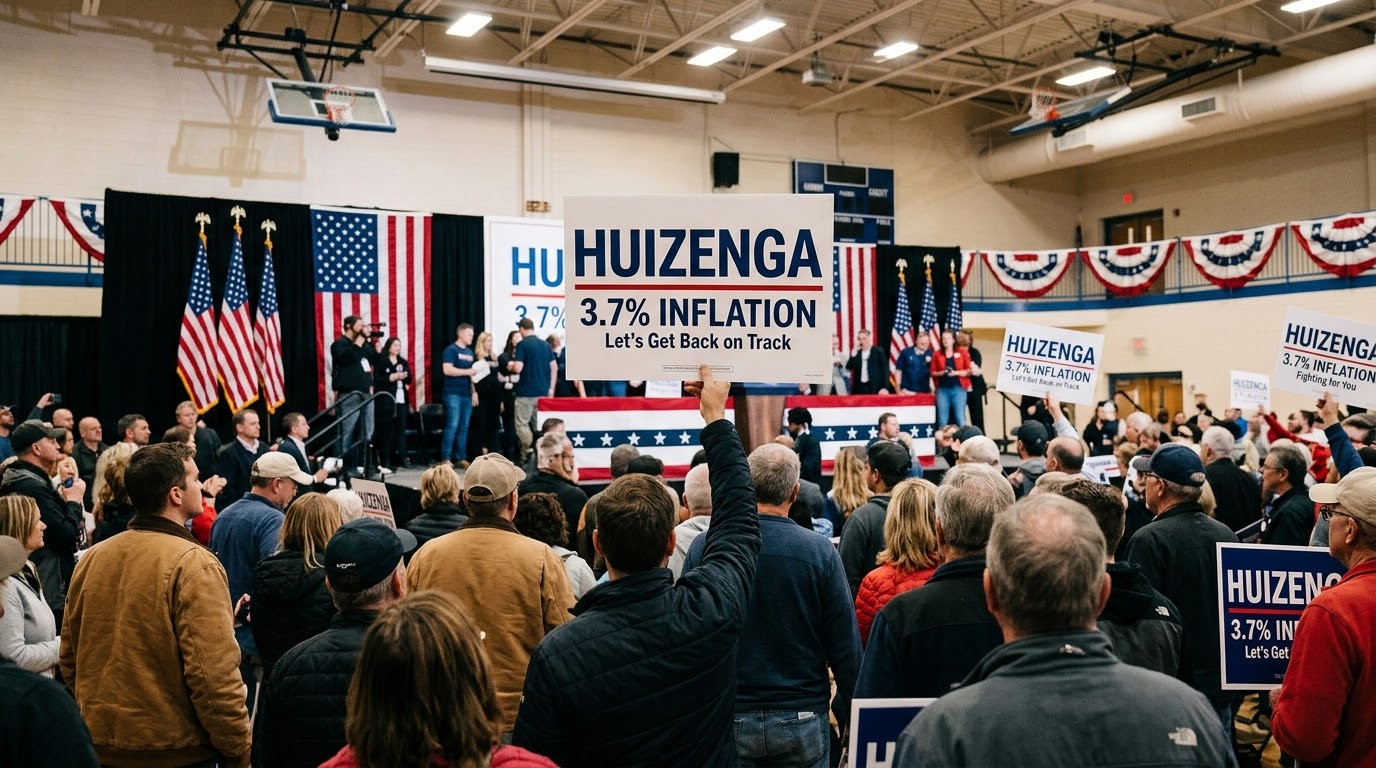
In March 2025, ahead of the second Trump administration’s sweeping “Liberation Day” trade announcements, Republican U.S. Representative Bill Huizenga of Michigan’s 4th Congressional District stood before reporters in Battle Creek. Asked about the potential financial pain that massive import taxes could inflict on his own constituents, Huizenga did not deny that the transition would be turbulent. Instead, he framed the disruption as a necessary sacrifice for long-term fiscal independence:
“Is there going to be some adjustments to that? Absolutely. Is it going to be easy? Not necessarily. Is it the right thing to do? Absolutely it is.”
This quote has become a focal point in the debate over the economic direction of the United States. It captures the philosophy of the second Trump administration’s economic nationalist agenda—a calculated gamble that short-term consumer hardship and supply chain friction are prices worth paying to decouple the American economy from foreign dependencies and revitalize domestic manufacturing. However, as the impacts of these policies unfold across the industrial heartland, Huizenga’s defense faces immense friction from mounting economic data and intense political opposition.
The Anatomy of the New Protectionism
The second Trump administration’s trade strategy represents a significant escalation from the targeted duties of 2018. Guided by the “One Big Beautiful Bill Act” passed in July 2025 and subsequent executive actions, the administration has deployed broad, reciprocal trade barriers. These include dramatic tariff hikes on essential metals, a sweeping 50% tariff on Canadian exports introduced in late summer 2026, and a scheduled 50% auto-tariff spike set to take effect in January 2027.
For lawmakers like Huizenga, backing these measures requires an explicit shift away from traditional, free-market conservatism toward an aggressive posture of executive trade protectionism. Proponents argue that by taxing foreign goods, the federal government forces multinational corporations to relocate factory floors, capital investments, and jobs back to American soil. From this perspective, the “adjustments” Huizenga referenced are merely the temporary friction of rebuilding a self-sustaining industrial base.
[Import Tariffs Imposed] ──> [Higher Material Costs] ──> [Supply Chain Disruptions]
                                                                │
                                                                ▼
[Tight Election Race] <── [Consumer Price Inflation] <── [Margin Compression]
The Domestic Toll on Integrated Supply Chains
Despite the administration’s goals, economic realities in states like Michigan highlight the complexity of modern, globalized supply chains. Southwest Michigan’s regional economy does not operate in isolation; it is deeply intertwined with cross-border commerce, particularly with Canada.
Industries throughout the region depend heavily on Canadian raw materials, including:
- Specialty metals
- Lumber
- Intermediate machinery components
- Crude oil, natural gas, and electricity
In an integrated manufacturing ecosystem, components frequently cross the border multiple times before a final product is assembled. Imposing a blanket 50% tariff on these inputs drives up operational overhead and narrows profit margins for local firms. Major automotive manufacturers are feeling this pressure acutely; Ford has braced for an estimated $1 billion hit, while General Motors projects a multi-billion dollar impact due to disrupted supply chains. Rather than insulating domestic enterprise, critics argue these levies function as a direct penalty on local producers who cannot easily source alternatives.
| Economic Indicator / Metric | Reported Impact under Policy | Source |
|---|---|---|
| Total Tariffs Paid by Michigan | ~$23 Billion since implementation | National Taxpayers Union Foundation |
| Average Cost per Michigan Household | $5,619 (Highest nationwide per-capita burden) | National Taxpayers Union Foundation |
| Average National Household Impact | ~$1,000 increase in annual costs (projected to hit $1,300) | Tax Foundation |
| Michigan Household Energy Bill Impact | Projected $910M+ annual increase by 2030 | Energy Innovation Analysis |
The Legislative Battleground
Within the halls of Congress, Huizenga has consistently translated his rhetorical defense of the administration into legislative action. He has voted multiple times—including high-profile roll calls in March 2025, September 2025, and February 2026—to shield the administration’s tariff policies from congressional oversight and legislative rollback.
These votes have effectively neutralized efforts by moderate Republicans and Democrats to exercise trade authority, keeping trade negotiations and duty adjustments firmly concentrated within the executive branch. This alignment with the administration’s broader push for regulatory relief and economic nationalism has solidified Huizenga’s standing among populist conservatives, even as it draws intense fire from political opponents.
Political Fallout and the 2026 Electoral Crucible
As inflation impacts household goods, the political consequences of this economic strategy have intensified. Opponents have used Huizenga’s voting record and his “not necessarily easy” concession to challenge his platform. Organizations like the Democratic Congressional Campaign Committee (DCCC) and local Democratic groups argue that these protectionist policies raise the cost of living for working families and force small businesses to close.
The local effects are clear in places like Kalamazoo, Michigan, where independent grocers report that rising tariffs are straining household budgets on everyday food items. This economic tension has placed Huizenga in a highly competitive reelection campaign against Democratic State Senator Sean McCann. McCann has focused his campaign on the rising costs of consumer goods, framing Huizenga’s legislative support for tariffs as a vote against the financial interests of his constituents.
In response, Huizenga’s campaign has focused on long-term relief, running advertisements that emphasize bi-partisan efforts to lower healthcare and drug costs while helping citizens keep more of their paychecks.
Conclusion
The debate over the second Trump administration’s economy highlights a fundamental disagreement on American trade and prosperity. For Representative Bill Huizenga and proponents of economic nationalism, the rising consumer costs and supply chain reconfigurations are a necessary, short-term sacrifice required to build an independent American industrial base. For critics, the policy is an expensive self-inflicted wound that burdens households and weakens local industries. As the trade friction continues, voters in manufacturing hubs like Southwest Michigan will ultimately decide whether this policy is the right path forward or an unsustainable economic burden.
Sources
- Huizenga Battle Creek Press Conference (March 2025): Representative Bill Huizenga’s original defense of the incoming administration tariffs was documented by Steve Carmody for Michigan Public, “Michigan congressman supports Trump’s upcoming tariff announcement.”.
- “Liberation Day” Context and 2026 Midterm Backlash: Analytical overviews regarding Huizenga’s ongoing defense of protectionism (“not necessarily easy”) alongside local pushback from factory workers in Michigan’s 4th district can be tracked via Michigan Public’s October 2026 reporting, “Republicans face midterm backlash from factory workers squeezed out of jobs by Trump’s tariffs.” and secondary syndication through the News4Jax Congressional Tracker.
- Michigan Financial Costs & Household Burdens: Data evaluating Michigan’s specific per-capita tariff penalty (~$23 Billion total, averaging $5,619 per household) and clean energy impact projections are aggregated in state policy reviews via the Michigan Independent Political Briefings.
- National Household Impact & Legislative Oversight: Broader consumer-level data pointing to a national baseline increase of $1,000–$1,300 in annual costs are cited within opposition briefs and campaign tracking sheets via the Democratic Congressional Campaign Committee (DCCC).
- Kalamazoo Grocery & Retail Stress: Documentation of the campaign between Huizenga and state Sen. Sean McCann, featuring testimony from Midtown Fresh owners regarding consumer register strain, can be viewed directly on the Sean McCann for Congress Information Portal.